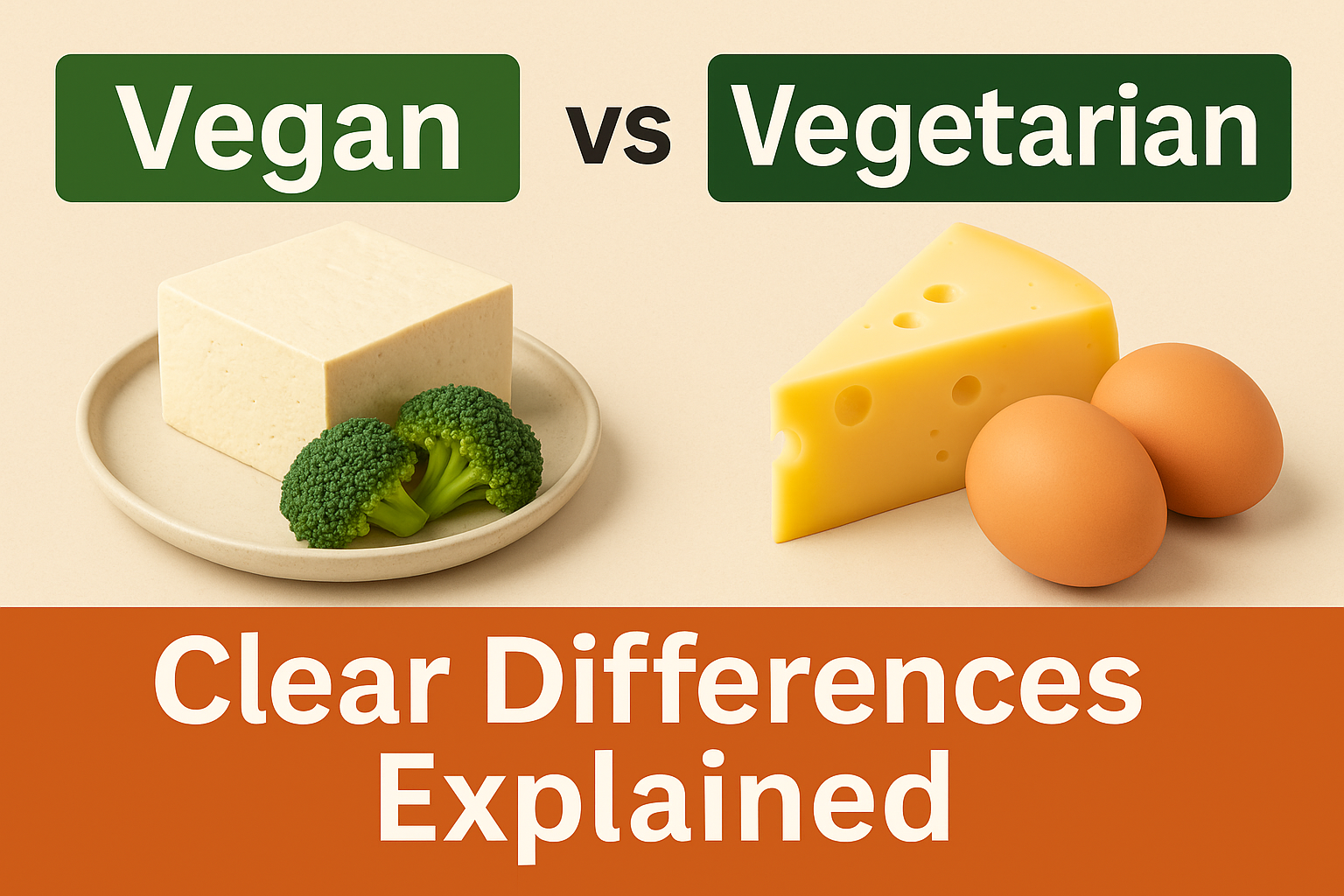
Vegan vs Vegetarian – Clear Differences Explained
Vegan and vegetarian diets are becoming massively popular in both the USA and UK, but most people still confuse them or think they’re “basically the same.” They’re not. The difference is simple, but important — especially if you’re eating healthier, going plant-based, or trying to understand what to buy at the grocery store. This guide breaks down vegan vs vegetarian in the clearest, simplest, and most helpful way possible.
**Introduction:
Vegan and Vegetarian Are NOT the Same — Let’s Clear This Up**
If you’ve ever told someone you’re vegan, you’ve probably heard:
“Ahh okay, so you eat eggs right?”
“You can have cheese though?”
“Oh, you’re basically vegetarian.”
Nope. Not even close.
Vegans and vegetarians share some similarities — both avoid meat — but the lifestyle, ethics, food options, and goals behind each diet are VERY different.
Let’s break it down clearly and confidently so there’s no confusion again.
1. VEGAN: Avoids ALL Animal Products
A vegan diet excludes:
❌ Meat
❌ Fish
❌ Eggs
❌ Dairy (milk, cheese, yogurt, butter)
❌ Honey
❌ Gelatin
❌ Any ingredients from animals
Vegans eat ONLY plant-based foods:
✔ Fruits
✔ Vegetables
✔ Grains
✔ Beans & lentils
✔ Nuts & seeds
✔ Plant milk
✔ Tofu, tempeh, vegan alternatives
Veganism = diet + lifestyle.
Vegans often avoid leather, wool, silk, and cosmetics tested on animals.
2. VEGETARIAN: Avoids Meat, BUT Still Eats Certain Animal Products
Vegetarians avoid:
❌ Meat
❌ Fish
❌ Gelatin
But they DO eat:
✔ Dairy (milk, cheese, butter, yogurt)
✔ Eggs (depending on the type of vegetarian)
✔ Honey
Vegetarian = plant-based eating + dairy + (sometimes) eggs.
This is extremely common in India, UK households, and US families who prefer lighter eating.
3. Vegan vs Vegetarian: Quick Comparison Table
| Category | Vegan | Vegetarian |
|---|---|---|
| Meat | ❌ No | ❌ No |
| Fish | ❌ No | ❌ No |
| Eggs | ❌ No | ✔ Yes (most) |
| Dairy | ❌ No | ✔ Yes |
| Honey | ❌ No | ✔ Yes |
| Ethics | Strong focus on animal welfare | Not always ethical-focused |
| Suitable for lactose-intolerant? | ✔ Yes | ❌ No |
| Environmental impact | Lowest | Low |
4. Why People Choose Vegan (USA + UK Trends)
✔ Ethics
No animal harm, no industry cruelty.
✔ Environment
Vegan diets reduce carbon footprint massively.
✔ Health
Some people feel lighter digestion, clearer skin, better energy.
✔ Fitness
High-protein vegan diets are becoming more popular among athletes.
USA & UK are seeing huge growth in veganism because plant-based foods are now more accessible than ever.
5. Why People Choose Vegetarian
✔ Easier transition
People keep dairy and sometimes eggs.
✔ Cultural reasons
Vegetarian diets are common in families influenced by Indian, Mediterranean, and religious lifestyles.
✔ Taste preferences
People want to avoid meat but not cheese or yogurt.
6. Which Diet Is Healthier? (Simple Answer)
Both vegan and vegetarian diets can be extremely healthy — when done right.
Vegan Benefits:
- Lower saturated fat
- Lower cholesterol
- Higher fiber
- Cleaner ingredients
Vegetarian Benefits:
- Easier protein sources (eggs, dairy)
- Simpler transition for beginners
But vegan diets have one advantage:
✨ No dairy = no lactose issues, lower inflammation for many people.
7. Common Myths (Let’s Bust Them)
Myth 1: Vegans don’t get enough protein
FALSE. Tofu, lentils, chickpeas, beans, tempeh → all high-protein.
Myth 2: Vegetarians eat healthy by default
Not true.
Vegetarian diets can still include junk food (pizza, cheese-heavy foods).
Myth 3: Vegan food is expensive
Only if you buy overpriced vegan substitutes.
Basics like beans, rice, pasta, veggies are cheap in USA & UK.
Myth 4: Vegetarian is the same as vegan
Not even close — dairy & eggs are the difference.
8. Vegan vs Vegetarian for Weight Loss
Most people lose weight faster on a vegan diet because:
✔ lower calories
✔ lower fat
✔ no cheese or creamy dairy
✔ more fiber
Vegetarian diets can work too, but dairy (cheese especially) slows progress for many.
9. Vegan vs Vegetarian for Muscle Building
Both are effective.
Vegetarian:
✔ Easy protein (eggs, Greek yogurt)
Vegan:
✔ Clean protein (tofu, tempeh, lentils)
✔ No saturated fat
✔ Better digestion
USA/UK bodybuilders are increasingly choosing vegan diets.
10. Which Diet Should YOU Choose?
Choose vegan if you want:
- a cleaner lifestyle
- ethical eating
- lower environmental impact
- dairy-free living
- faster weight loss
Choose vegetarian if you want:
- an easier transition
- to keep dairy/eggs
- a flexible lifestyle
Both diets are great choices depending on your goals.
Frequently Asked Questions (FAQ)
1. Which is healthier: vegan or vegetarian?
Both can be healthy — vegan tends to be lower in fat and cholesterol.
2. Can vegetarians eat eggs?
Many do (ovo-vegetarians). Some avoid eggs.
3. Do vegans eat cheese?
No. Only plant-based cheese.
4. Can vegans eat honey?
No, because it comes from bees.
5. Which diet is cheaper?
Vegan is often cheaper if you stick to whole foods like beans, rice, pasta, and veggies.
6. Is vegan hard in USA/UK?
No — stores like Walmart, Tesco, Aldi, and Trader Joe’s make it very easy.
7. Can kids follow vegan or vegetarian diets?
Yes, if planned well. (Always consult a pediatric nutritionist.)
**Conclusion:
Both Diets Are Good — But They’re NOT the Same**
Vegetarian diets avoid meat.
Vegan diets avoid all animal products.
That’s the core difference.
Whichever lifestyle you choose — vegan or vegetarian — the key is eating real, whole, plant-based foods that support your health, energy, and long-term wellness.